
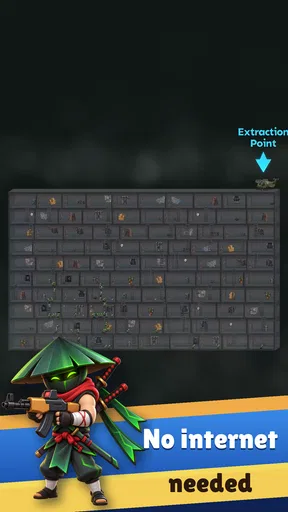
Last Extract review
 Analysis by GetAllApps
Last Extract caught my attention because its premise puts pressure on every decision: gather useful resources, contend with a horde, and find a way out alive. That gives this adventure game a clear emotional hook before I even think about long-term progression. I’m drawn to games where the objective is easy to understand but the route to it can go wrong, and this one is built around that tension. My first impression is of a compact, danger-led experience rather than a sprawling adventure focused on sightseeing.
That distinction matters when choosing what to play. If I have a little time and want a session with a direct purpose, an extraction premise is appealing: the goal is not simply to survive indefinitely, but to make survival count by getting out with something useful. Last Extract is free to install, comes from VOODOO, and is rated Teen. Its audience response is strong so far, with an average rating of 4.4 from around 36,000 ratings, though those figures alone cannot tell me whether its particular pacing will suit me.
First impressions: a clear goal under pressure
The name and premise set expectations that are pleasantly focused. “Extract” suggests that a run has a destination, while the threat of a horde makes the journey there feel like the central challenge. That is a more specific promise than simply offering an adventure world to explore. The question I would keep asking during play is not only whether I can gather more, but whether the resources I have already collected are worth risking on another stretch of the route.
That trade-off is where the concept can become compelling. In a game built around escape, greed and caution pull in opposite directions. Continuing to loot may improve what I bring back, but it also means staying exposed for longer. Even without assuming any particular inventory rules or enemy behavior, the basic premise supports a useful habit: decide what would make a run feel successful before chasing every possible pickup. A modest haul that reaches safety can be more satisfying than a larger one lost to overconfidence.
The game is free, which makes it easy to try without first deciding whether a purchase is worthwhile. It does include in-app purchases, ranging from $0.99 to $109.99 per item, so I would treat optional spending as a separate decision rather than part of the basic appeal. If I’m only curious about the extraction loop, I can begin with the free download and judge whether the tension itself holds my attention before considering anything else.
A setting that serves the objective
The premise gives the world a practical identity: resources are not merely decorative objects, and the threat is not just background drama. They matter because they sit between the player and a safe exit. That functional relationship is a useful way to read the game’s setting. I’m less interested in whether an environment is full of detail for its own sake than in whether its visual language makes danger, opportunity, and direction easy to understand while I’m under pressure.
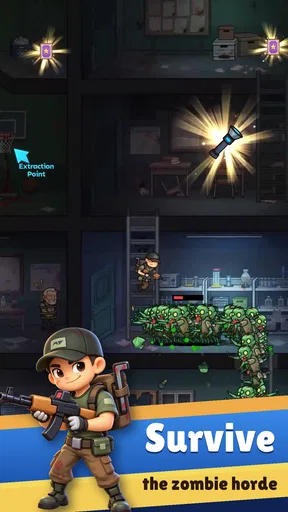
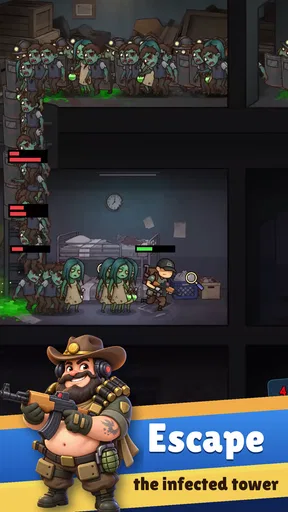
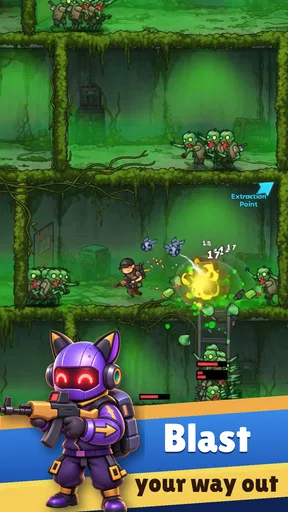
In a horde-focused adventure, visual clarity is part of the challenge, not just presentation. If I’m scanning for loot while tracking threats, the scene needs to communicate quickly. A strong art direction can make a run feel tense without making it confusing: hazards should feel like part of the world, while useful objects should be recognizable enough that choosing to approach them feels deliberate. That balance is especially important on a phone, where a glance needs to tell me more than a long inspection would.
The title also frames the setting as a place to pass through rather than settle into. That gives the adventure a restless mood: I’m there to accomplish something and leave, not to treat every corner as a permanent home. For players who like environmental storytelling through movement and risk, that can be more engaging than a relaxed exploration game. If I mainly want a calm world to wander through at my own pace, the premise points toward a more pressured experience instead.
Sound and rhythm: tension needs room to breathe
Sound can do important work in a game about an approaching horde, even when I’m not consciously listening to every cue. Audio can help make a space feel unsafe, give movement a sense of urgency, and distinguish a quiet moment from a dangerous one. I would pay attention to whether the soundscape makes me more alert without becoming exhausting. The best fit for this kind of premise is not constant noise; it is contrast, with enough breathing room for a sudden change in pressure to register.
That same principle applies to pacing. If every moment feels equally frantic, the threat can become routine. If the game gives a run room to build, then a decision to stop looting and move toward extraction can feel like a genuine turning point. I find that rhythm more satisfying than unbroken action because it lets me weigh risk rather than react mechanically to one continuous rush. For a quick mobile session, a clear rise in tension can also make it easier to stay engaged without needing a long story setup.
One practical way to approach a run is to treat the first stretch as information-gathering: notice how quickly the situation becomes uncomfortable, how much attention resource collection demands, and whether I can keep track of the route while threats are present. Then I can adjust the next attempt instead of repeating the same risky pattern. That is useful even for players who prefer improvisation, because recognizing when a run has shifted from productive to reckless is often the difference between a memorable escape and a frustrating loss.
Mechanics that make the premise matter
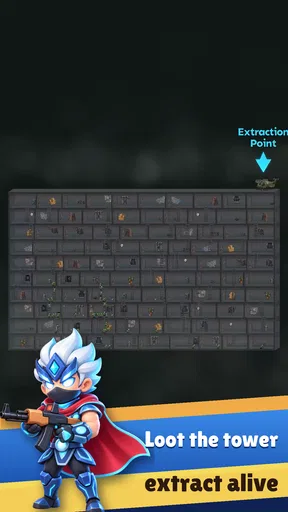
The central mechanical fit is straightforward: collecting resources and surviving are linked to the need to get out. That connection gives ordinary choices more weight. In many adventure games, gathering is an optional side activity; here, the store summary’s emphasis on looting before escape makes it part of the main identity. I would expect the satisfying moment to come from reaching safety after deciding what was worth collecting, not from treating every resource as an automatic obligation.
That leads to a useful trade-off for newcomers: avoid turning every run into a completionist sweep. A route that prioritizes a few worthwhile pickups can preserve momentum, while searching every corner may keep me exposed longer than the extra reward deserves. I would also use early attempts to learn what kind of risk I personally enjoy. Some players will find the tension exciting when they push their luck; others will prefer a conservative approach that focuses on reaching the exit reliably.
Compared with a conventional survival game, the extraction framing offers a more defined endpoint. Compared with a broad exploration adventure, it gives less reason to linger just for the scenery. And compared with a pure action game, its resource-gathering objective asks me to think about whether fighting or moving on better serves the run. Those distinctions make it a better match for someone who enjoys short, goal-oriented challenges than for someone seeking a deep narrative journey or a large, leisurely world.
There is also a real limitation in that focus. A loop centered on collecting, facing danger, and escaping can feel repetitive if the decisions stop changing from run to run. The premise creates tension, but tension alone is not enough to satisfy every player over time. I would recommend trying it with an open mind about repetition: the appeal depends on whether I enjoy refining my judgment under pressure, rather than expecting each session to introduce a very different kind of activity.
The current version is 0.0.37, and the game was released on May 8, 2026. It requires Android 8.0 or later. Those details are useful when deciding whether it will run on a device, but the more important question for me is whether I want an adventure shaped by repeated high-stakes decisions. Its popularity—over one million installs and around 1,300 written reviews—shows that many people have given it a try, but personal fit still comes down to how much I enjoy its core push-and-pull.
Who I’d recommend it to
I’d point Last Extract toward players who like a clear objective, a hostile setting, and the feeling that staying longer might be a mistake. It should also suit someone who wants a mobile adventure they can approach in focused bursts, especially if they enjoy learning from a risky attempt and changing their priorities next time. The Teen content rating is worth keeping in mind for families choosing games, while the in-app purchase range is a reason to be deliberate about spending rather than assuming every optional item is necessary.
For an everyday example, imagine having a short break and wanting more than a passive distraction but less commitment than settling into a long campaign. This is the kind of premise where I can set myself a small goal—collect what seems useful, keep an eye on the danger, and leave before a promising run turns greedy. That makes the game a better candidate for a purposeful session than for half-attentive play. If I can’t give the screen enough attention to track both resources and threats, I’d choose something less demanding at that moment.
I’d skip it if I’m looking for a gentle exploration game, a story-first adventure, or an experience that avoids pressure and repeated risk. I’d also look elsewhere if I dislike the possibility that a run’s success depends on knowing when to stop collecting. Players who prefer a more relaxed pace may be happier with an open-ended exploration game; those who want a long narrative arc should choose an adventure built around story rather than extraction. That is not a flaw in the premise so much as a clear boundary around who is likely to enjoy it.
My atmosphere verdict
What I like most about the concept is how its mood and objective point in the same direction. The horde gives the setting danger, resource gathering creates temptation, and escape provides a reason to turn that tension into a decision. That coherence is more valuable than a pile of unrelated activities. It gives the game a recognizable identity and a simple question to carry through a run: is what I might gain worth the extra time I spend here?
My advice is to approach it as a game of judgment, not as a checklist. Start cautiously, notice how its rhythm feels on your device, and resist the urge to treat every available resource as mandatory. If the atmosphere makes each choice feel consequential, the premise has a strong chance of clicking. If repeated risk and a focused loop sound tiring rather than exciting, the usual open-world or story-led alternative will probably serve you better. For players who want a tense adventure with a clear reason to move, this is an easy free game to consider.
Pros and cons
Pros
- Quick extraction makes short work of opening many archive files.
- Supports password-protected archives for access to secured files.
- A straightforward interface is easy to navigate.
- Useful for unpacking files received through other apps.
- Extracted files can be saved for offline access.
Cons
- Some archive formats may not be supported.
- Password-protected files require the correct password.
- Large archives can take time and storage space to extract.
- The app may show ads during use.
- It offers limited tools beyond archive extraction.


